


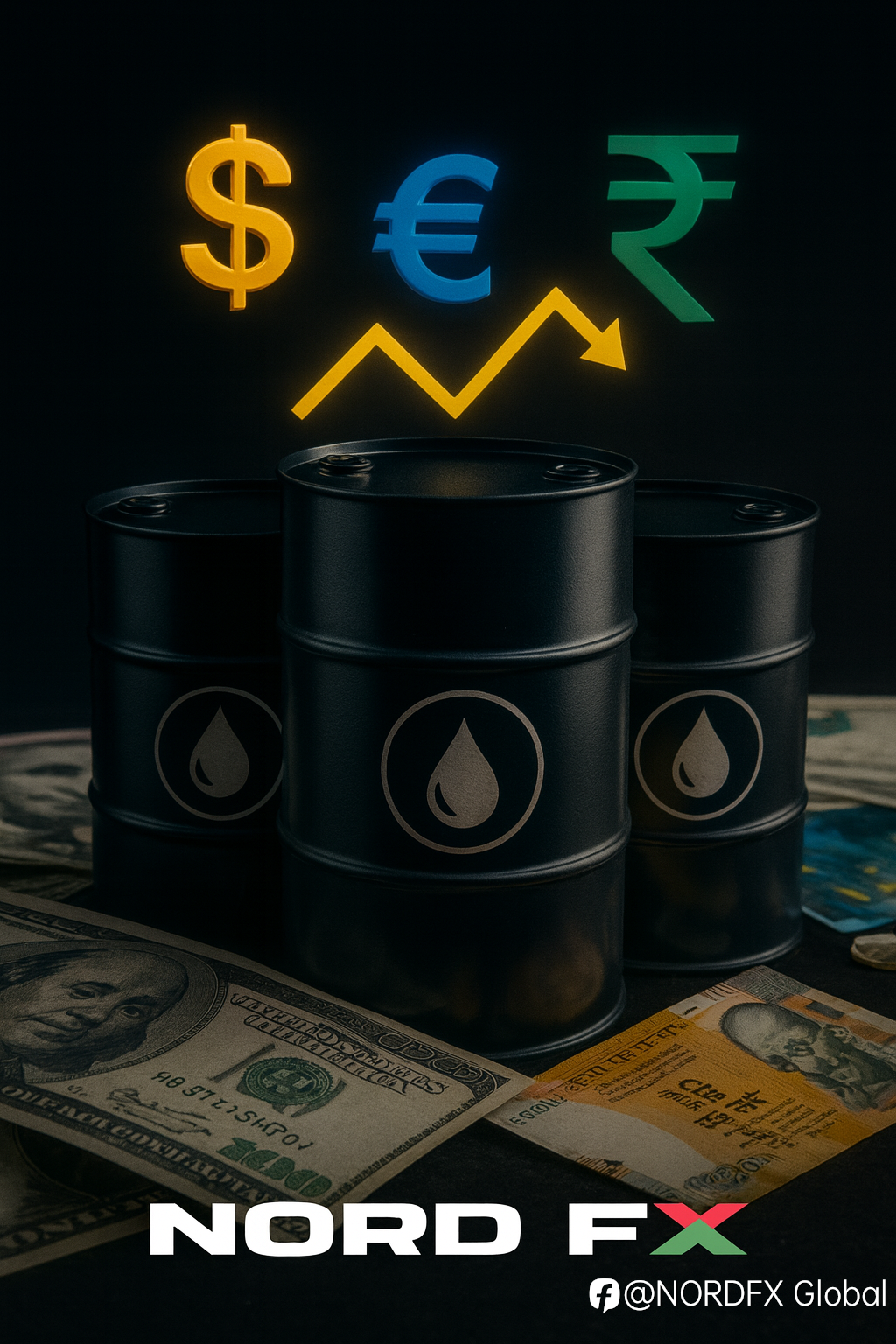
🛢 Oil Price Shocks and FX Reactions
Oil markets remain volatile, with supply surpluses, geopolitical tensions, and central bank decisions creating ripple effects across both commodities and currencies.
🔍 What’s driving oil prices
Fed policy: The recent rate cut supported demand expectations, but cautious signals about the economy are limiting upside.
OPEC+ output: Gradual easing of production cuts is adding to global supply, creating a surplus outlook.
Geopolitical risks: Strikes on energy infrastructure highlight how fragile supply lines remain.
Weak demand: Softening indicators in Asia and high stockpiles in the US are putting downward pressure on prices.
💱 FX market reactions
USD: The dollar often benefits during risk aversion, even when oil is volatile.
Oil exporters (CAD, NOK, RUB): Their currencies tend to strengthen when oil rises and weaken when it falls.
Oil importers (INR and others): They face pressure when oil climbs, as higher import bills fuel inflation.
EUR and GBP: Sensitive to oil-driven inflation, but their moves depend heavily on central bank expectations.
⚠️ Why it matters for traders
Oil shocks fuel inflation, complicating monetary policy paths.
Rising energy costs can shift rate expectations and affect carry trade opportunities.
Emerging markets are especially vulnerable to oil spikes, with risks of central bank intervention.
✅ Key takeaways
Monitor Fed communications and interest rate outlooks.
Track OPEC+ decisions and sudden supply disruptions.
Watch global demand signals and inventory data for trend confirmation.
Oil remains one of the strongest cross-market drivers. For traders, this means higher volatility but also more opportunities.
👉 Open your NordFX account today and explore these moves:
https://account.nordfx.com/acc...
إخلاء المسؤولية: الآراء الواردة هنا تعبر فقط عن رأي الكاتب، ولا تمثل الموقف الرسمي لـ Followme. لا تتحمل Followme مسؤولية دقة أو اكتمال أو موثوقية المعلومات المُقدمة، ولا تتحمل مسؤولية أي إجراءات تُتخذ بناءً على المحتوى، ما لم يُنص على ذلك صراحةً كتابيًا.

