


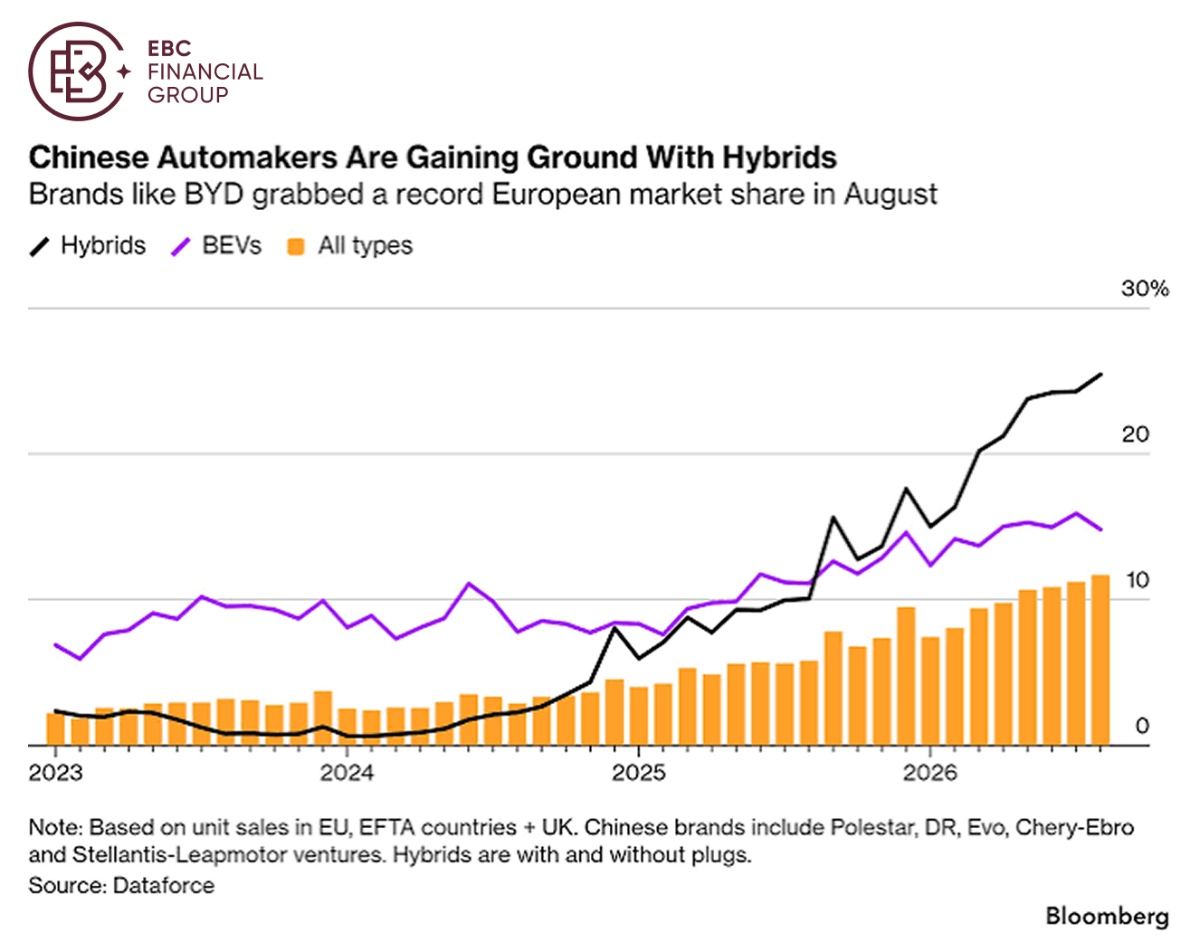
Chinese carmakers grabbed another record share of Europe's car market last month, luring buyers still wary about going fully electric with more affordable hybrid vehicles.
One in four sales of all hybrids sales in the region are Chinese brands, according to Dataforce. Hybrids are an EV stepping-stone amid concerns around charging networks and driving range.
European carmakers are making mass lay-offs as the cheaper models flood the market. The EU has enforced additional anti-subsidy tariffs of up to 45% on EVs imported from China.
Germany is drafting a suite of economic security measures—potentially featuring new tariffs on hybrid vehicles—which it intends to pitch to the EU, Bloomberg reported this month.
The European Commission remains hopeful that Beijing will accept voluntary trade limits, thereby justifying its pursuit of a diplomatic, negotiated settlement. But the initial hybrid quota proposal has been rejected.
Volkswagen dropped out of the Euro Stoxx 50 (E50EUR) for the first time in 15 years, highlighting the sector's poor performance for 2026. The group is facing plummeting sales in China and higher US tariffs.
Similarly, Stellantis (STLA.N)'s share price has nearly halved since last year's removal. Ferrari, BMW and Mercedes-Benz are currently the only car stocks left in the benchmark blue-chip stock index.
Pivot to America
US sales of EVs continue to decline after last year's elimination of tax credits, showing no recovery despite surging fuel prices linked to Middle East tensions. That stand in contrast to Europe's surging demand.
Many carmakers are focusing on the US to make up for crashing sales in China and shrinking profits in Europe. They benefit from selling higher-margin petrol pick-up trucks and large SUVs in the market.
US automotive industry warned Chinese competitors would overwhelm domestic manufacturing.
Even so Trump avoided the topic during the meeting with President Xi earlier this month.
Toyota (TM.N) is expected to post a 1.1% sales gain in the US through the first three quarters of the year. Analysts point out that its aggressive multi-decade lead in hybrid variations is allowing them to take the industry by storm.
In contrast, Tesla (TSLA.OQ) has had to defend its market share through margin-compressing price cuts, which sent it stock significantly lower this year. JPMorgan cut the price target to $415 from $445 while maintaining a 'Neutral' rating.
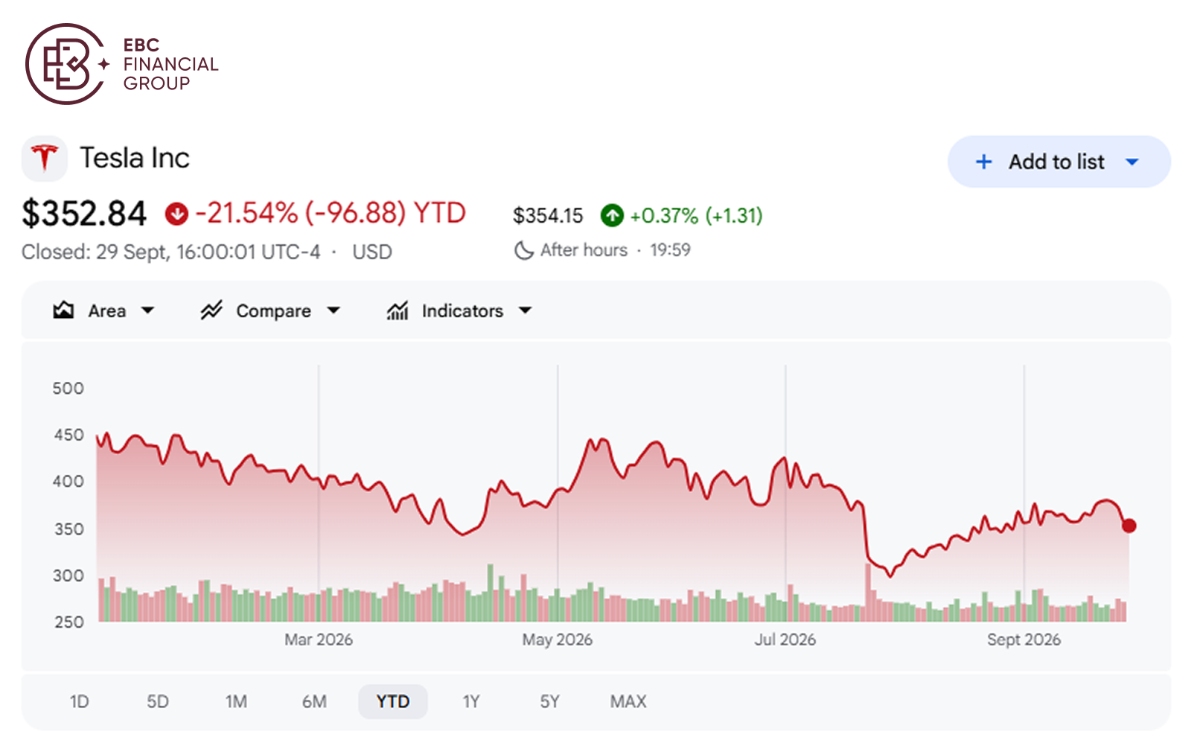
Goldman Sachs recently slashed its delivery forecast for Tesla, saying weaker sales in the US and China. It maintained a Neutral rating with a $360 price target, with Tesla closing at around $357 as of Monday.
Bears argue it is heavily overvalued next to legacy peers. Conversely, the bull thesis relies entirely on autonomy revenues as its live Robotaxi network scales across selected US metro areas.
Forever war
The oil market has weathered the largest-ever supply shock better than anticipated. Despite that, the resilience hides several weak points that could easily crack under prolonged stress.
The US and China have relied heavily on their stockpiles of oil to cushion the blow. Should the conflict persist for an extended period, those reserves face inevitable depletion, according to Capital Economics.
One CEO of a major bank told CNN that the US-Iran conflict could last forever; S&P Global Energy does not expect Middle East oil production to return to pre-war levels even by the end of next year.
A shortage of supertankers is driving up global oil shipping costs, making some long-distance crude trades unprofitable. Several industry executives said the surge would previously have been unimaginable.
Moving a cargo from Houston to Asia now adds about $26 a barrel. Up until now, Asian buyers swapped lost Middle Eastern barrels for longer-haul supplies from the Americas.
Oil traders warn that spiking shipping costs are squeezing refining margins, discouraging companies from buying long-distance crude cargoes despite strong global demand for diesel and gasoline.
Those conditions are heavily impacting carmakers through a twin squeeze on manufacturing overheads and logistics channels. In the short term, the European carmakers in particular could see their shares drop further.
EBC Financial Group Disclaimer: This material is for general information purposes only and is not intended as (and should not be considered to be) financial, investment or other advice on which reliance should be placed. No opinion given in the material constitutes a recommendation by EBC Global Financial Collaboration or the author that any particular investment, security, transaction or investment strategy is suitable for any specific person.
إخلاء المسؤولية: الآراء الواردة هنا تعبر فقط عن رأي الكاتب، ولا تمثل الموقف الرسمي لـ Followme. لا تتحمل Followme مسؤولية دقة أو اكتمال أو موثوقية المعلومات المُقدمة، ولا تتحمل مسؤولية أي إجراءات تُتخذ بناءً على المحتوى، ما لم يُنص على ذلك صراحةً كتابيًا.

