


In today’s rapidly evolving digital learning ecosystem, traditional science education is undergoing a massive transformation. Hands-on laboratory practice remains fundamental to mastering complex scientific principles, yet educational institutions frequently struggle with resource limitations, safety hazards, and geographical boundaries. Modern educational technology bridges this gap by offering intuitive, immersive digital tools that bring laboratory experiments directly to students' screens. Among these groundbreaking advancements, an interactive Chemistry Reaction Simulator stands out as a pivotal tool for modern chemistry education.
Breaking Physical Boundaries with Digital Laboratories
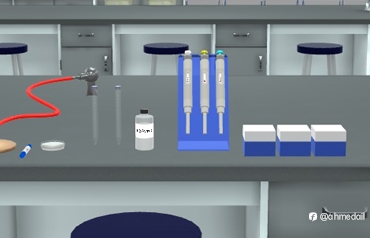
Traditional chemistry laboratories require significant ongoing investments in physical equipment, specialized chemical reagents, and comprehensive safety gear. Moreover, hazardous chemical reactions, tightly scheduled lab hours, and the constant risk of equipment damage can severely constrain student exploration. A modern Virtual Lab addresses these exact operational challenges by providing dynamic, risk-free environments where learners can test hypotheses, combine chemical substances, and observe immediate reaction dynamics without physical constraints or dangerous exposure.
By shifting from static textbook diagrams to interactive digital environments, students gain the confidence to experiment freely. They can alter molecular proportions, adjust ambient temperatures, and observe thermodynamic or kinetic changes in real time. This active learning approach substantially improves conceptual comprehension, spatial molecular understanding, and long-term knowledge retention across diverse STEM fields.
Enhancing Engagement Through Hands-On Virtual Chemistry Experiments
Active engagement is the cornerstone of true scientific mastery. When students conduct engaging Virtual Chemistry Experiments, abstract chemical formulas transform into tangible visual phenomena. Interactive 3D models allow learners to visualize atomic bonds breaking, precipitates forming, and gas releases occurring at both micro and macro levels.
Key advantages of simulation-based learning include:
- Instant Visual & Quantitative Feedback: Real-time data visualization helps students analyze reaction kinetics, stoichiometry, and chemical equilibria seamlessly.
- Unrestricted Repeatability: Learners can repeat complex experiments infinitely to master technical steps and refine analytical skills without consuming expensive chemical reagents.
- Universal Accessibility: Students and educators can access high-fidelity learning modules from anywhere at any time, promoting educational equity and remote learning excellence.
Integrating Interdisciplinary STEM Simulations
Scientific disciplines rarely exist in total isolation. Modern educational strategy emphasizes holistic STEM approaches where chemical processes connect directly to physical forces, thermodynamics, and biological mechanisms. For instance, understanding molecular reaction rates often requires analyzing thermal energy transfer and kinetic dynamics—areas where exploring Physics Simulation Online tools complements chemistry education seamlessly.
By integrating cross-disciplinary virtual simulations, universities and high schools prepare students for real-world research environments where physics, chemistry, and engineering intersect to solve complex problems.
The Future of Higher Education and STEM Training
As universities, schools, and professional training institutions continue to adopt hybrid and blended learning frameworks, digital simulation software is no longer merely a secondary supplement; it is an essential component of modern scientific curricula. Utilizing state-of-the-art simulation technology empowers educators to deliver high-impact lessons while enabling students to achieve academic excellence safely, effectively, and efficiently.
إخلاء المسؤولية: الآراء الواردة هنا تعبر فقط عن رأي الكاتب، ولا تمثل الموقف الرسمي لـ Followme. لا تتحمل Followme مسؤولية دقة أو اكتمال أو موثوقية المعلومات المُقدمة، ولا تتحمل مسؤولية أي إجراءات تُتخذ بناءً على المحتوى، ما لم يُنص على ذلك صراحةً كتابيًا.

