
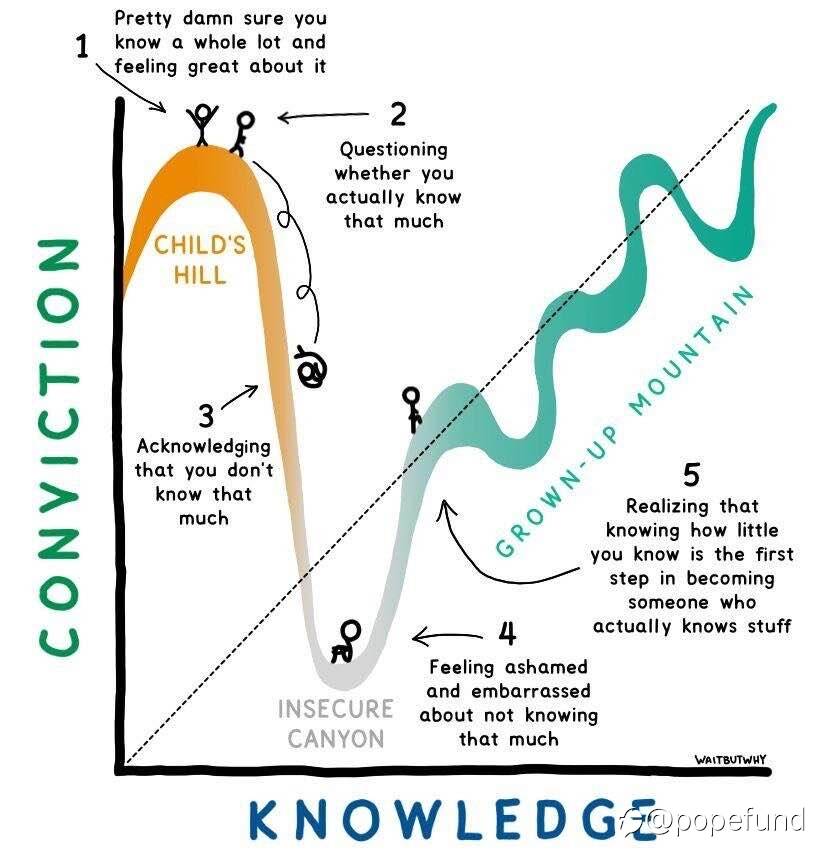
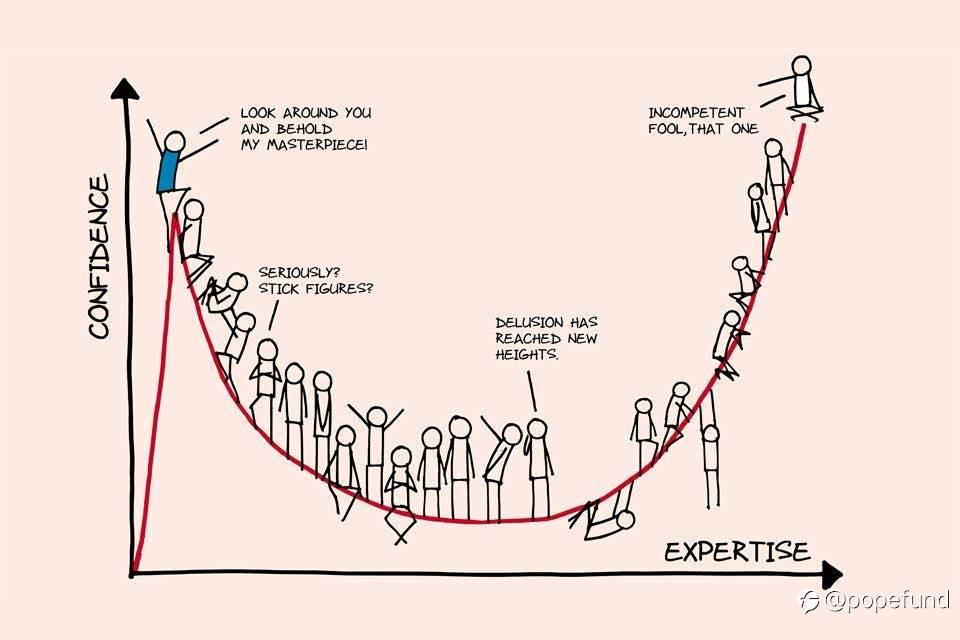
The Dunning–Kruger effect is a hypothetical cognitive bias stating that people with low ability at a task overestimate their own ability, and that people with high ability at a task underestimate their own ability.
As described by social psychologists David Dunning and Justin Kruger, the bias results from an internal illusion in people of low ability and from an external misperception in people of high ability;
The miscalibration of the incompetent stems from an error about the self, whereas the miscalibration highly competent stems an error from others.
It is related to the cognitive bias of illusory superiority and comes from people’s inability to recognize their lack of ability.
Without the metacognition people cannot objectively evaluate their level of competence.


تم التحرير 15 Aug 2021, 22:33
إخلاء المسؤولية: الآراء الواردة هنا تعبر فقط عن رأي الكاتب، ولا تمثل الموقف الرسمي لـ Followme. لا تتحمل Followme مسؤولية دقة أو اكتمال أو موثوقية المعلومات المُقدمة، ولا تتحمل مسؤولية أي إجراءات تُتخذ بناءً على المحتوى، ما لم يُنص على ذلك صراحةً كتابيًا.