

We’ve all heard the saying, “the trend is your friend.” In an up trend, traders would focus on buying. Whereas in a down trend, it makes more sense to look for opportunities to sell. Of course, when the market moves get treacherous, one would want to seize the favorable opportunities, follow the trend rather than go against it. Unfortunately for forex traders and speculators, the trends in the forex market are usually not as obvious as they would hope. As a general rule, global stock markets and certain commodity markets usually have pro-longed trends, and the forex market tends to be range-bound for most of the time. Forex traders should bear this in mind and get prepared.
Exchange rate dynamics
The forex market, in essence, is a marketplace where currencies are traded in pairs, namely one against the other. This dynamic status alone makes it almost impossible for any major currency pair to stay completely flat in a short period. In other words, a specific economic factor could have a significant impact on a country and its currency. Here is a good example: the Brexit referendum in the summer of 2016 made GBP plunge more than 20% overnight. Now more than 3 years have passed, the pound has rebounded slightly from its previous lows. In the long run, say the one to ten years horizon, the forex market obviously has more consolidation periods than other financial markets. The reason behind this is simple, the currencies are traded in pairs.
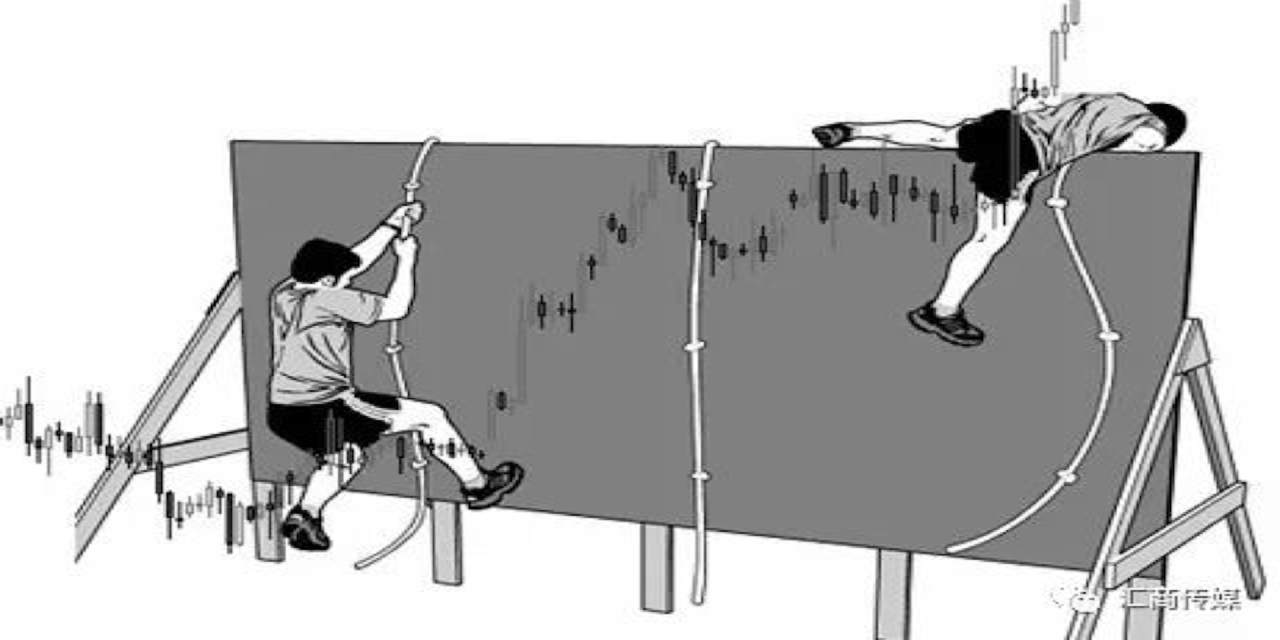
Scale is another key factor, it explains why it takes longer for trends to develop in the forex market, which in turn leads to longer volatility cycles. This is because the fundamental factors behind currency pricing are much larger than those behind individual stock pricing. As we are dealing with a larger economic picture involving global currencies, it often takes a longer period of time for measures to play their parts. The forex market is the world’s largest market, with a daily trading turnover potential of more than $6 trillion, while the daily potential of the US stock market is about $50 billion. With all this in mind, it makes sense for Forex traders to prepare strategies for both trend and range markets.
Strategies for trading choppy ranges
As a trader, I always follow the large banks and institutions, this is because they are the driving force behind the biggest moves in the market. Superior in funds, position size, and influence, they are able to push prices up or down with their buying or selling orders. Retail investors are unlikely/not capable to do so. Footprints of such banks and institutions can help us trace their actions, and in turn provide us with an easy way to decide whether to buy, sell or stay sidelined.
Let us see the big market players’ influence by looking at the price moves of the US dollar against the Canadian dollar since last spring (as shown below).
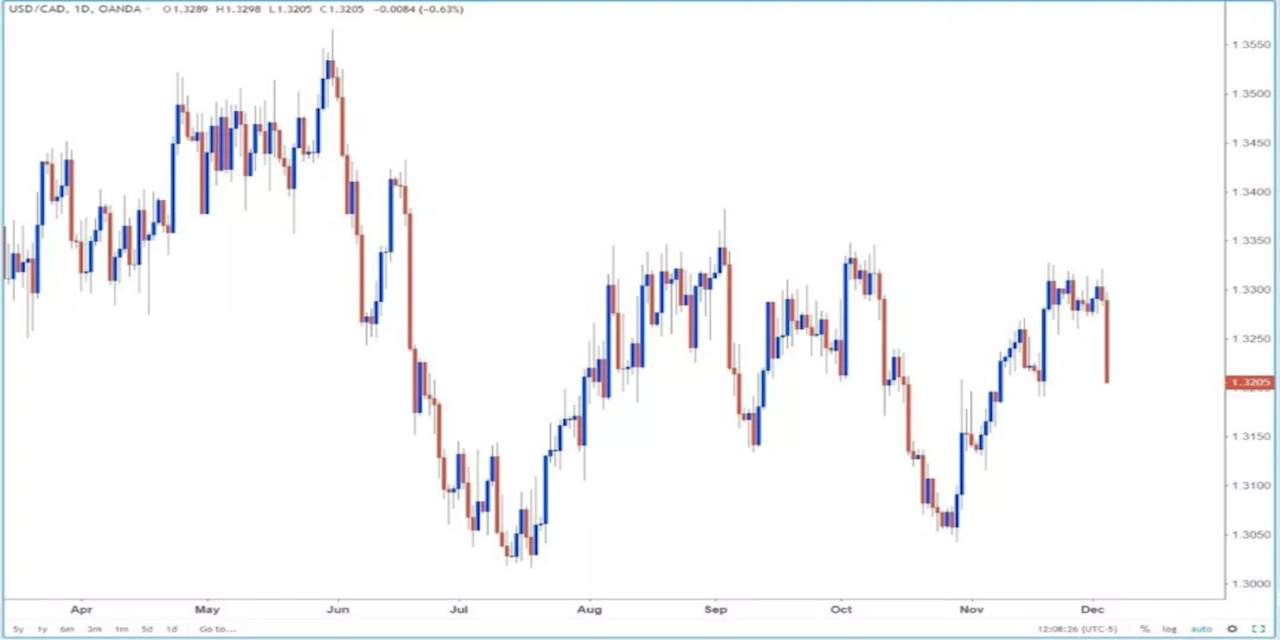
USD/CAD price action in 2019
We can see that the USD/CAD went through a turbulent year. The dynamism behind its moves was strong, and the prices had tried to break out in both directions. Although trends took hold at times, they all ended up short-lived. This shows that major market players were hesitant about the fair value of the USD/CAD, which is a very frustrating thing for traders trying to follow the long term trend of the currency pair. Yet, if we look at the extreme levels, we can see evidences of strong institutional buying and selling, which create the main supply and demand zones. Let's take a closer look through the following chart:
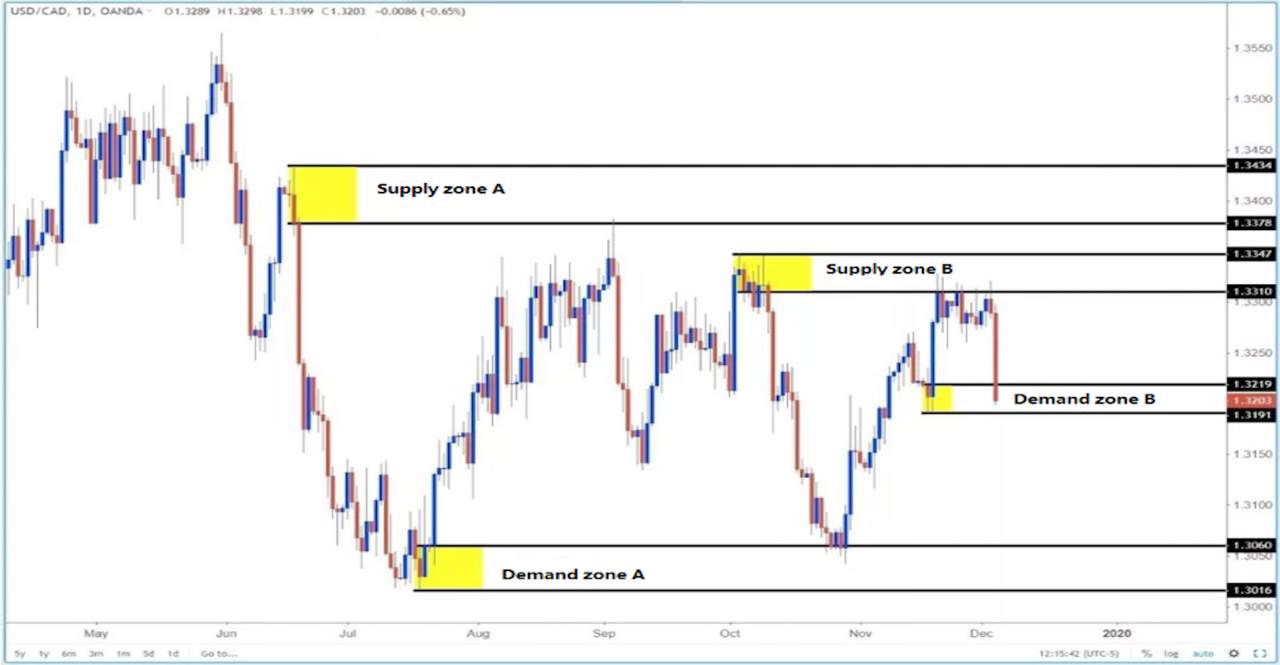
The chart above presents a new perspective on the price moves of the USD/CAD. For supply zone A and demand zone A, we should focus on how the move got out of the yellow "confirmation zones". Obviously, in these zones, there is a major imbalance between buyers and sellers, leading to rising demand and falling supply. Who can have the funds and position size to create moves of this size? The answer is likely to be the institutions, not the retail investors. These zones gave rise to extreme price actions, and then we can see that when retesting the two zones at a later date, the price failed to break out at either point and return to the mean.
In range trading, the danger is to rush into the market before the price reaches the extremes. The supply zone B works well because it is at the top of the big range and still promises considerable potential profits. Demand zone B, however, lingers too long in the middle of the big range, thus promising limited profit margins. Although we can still make modest profits by buying within this demand zone, it is wiser to exercise caution and wait for a lower entry point.
Trend trading is a game that requires patience, because directionless fluctuations can be very bewildering for some people. The trading rules are actually very simple: typically, one should try to avoid the middle levels and catch the extreme levels! Now having read this article, I hope you have a better understanding of range trading.
إخلاء المسؤولية: الآراء الواردة هنا تعبر فقط عن رأي الكاتب، ولا تمثل الموقف الرسمي لـ Followme. لا تتحمل Followme مسؤولية دقة أو اكتمال أو موثوقية المعلومات المُقدمة، ولا تتحمل مسؤولية أي إجراءات تُتخذ بناءً على المحتوى، ما لم يُنص على ذلك صراحةً كتابيًا.

اترك رسالتك الآن